If you’ve seen one mouse, you almost certainly have more than one. In the homes we treat around Cleveland, the typical number is somewhere between a handful and about ten. Most homeowners catch five or six on their own before they call us. Hundreds are rare, and we’ll explain why below.
The honest answer is that nobody can give you an exact count from the outside. Mice keep coming in through whatever gap let the first one in. The only way to get a real number is to seal the entry points and then trap what’s already inside. Until that happens, you’re counting a moving target.
You can still get a good estimate, though. Here’s how we do it.
How to Estimate How Many Mice You Have
You won’t see most of the mice in your house. They’re active at night and stay close to cover. What you can see is what they leave behind, and that tells you a lot.
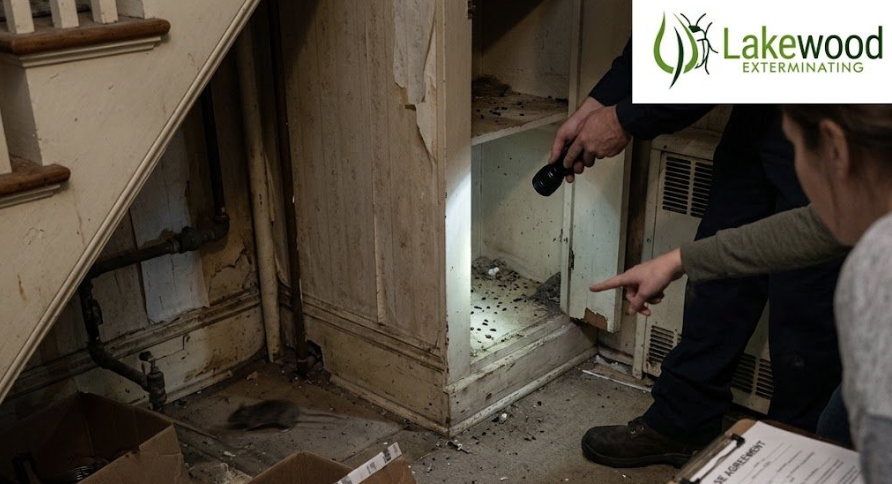
Look at how spread out the droppings are. House mice rarely travel more than about 30 feet from their nest and food supply. If you’re finding droppings in the kitchen and also in a basement corner on the other side of the house, you’re likely dealing with more than one mouse and possibly more than one nest.
Check whether the droppings are fresh. Fresh droppings are dark and soft. Old ones are dry, gray, and crumble. Lots of fresh droppings in several spots points to an active, growing group. A few old ones under the stove might be left over from a mouse that’s already gone.
Pay attention to when you see them. A mouse running across the floor at 2 a.m. is normal behavior. A mouse out in daylight usually means competition for food or nesting space, which usually means a bigger population.
Listen. Scratching in one wall cavity could be one mouse. Scratching in the ceiling, the walls, and the basement at the same time is not one mouse.
Count what the traps catch. This is the most reliable method. Set traps along walls about 10 feet apart in every area with activity. If you’re still catching mice after the first few days, they’re either still getting in or there were more than you thought. Usually it’s both.
How Fast Do Mice Reproduce?
This is where most people panic, and the numbers on paper are scary.
House mice give birth 18 to 21 days after mating, usually to five or six pups. A female can have 5 to 10 litters a year, and her young can start breeding at 5 to 6 weeks old. Run that math for a few generations and you get the “hundreds of mice in a few months” figures you see online.
Most mice we catch in Cleveland homes are deer mice, not house mice. You can tell them apart by their larger size and white bellies and feet. Here, deer mice breed mostly from spring through fall, which slows things down compared with a house mouse population that has warmth and food all year.
What matters most is the start of an infestation. Often it’s a single pregnant female or a small family group that found a way in. That’s why the five or six mice most people catch matches an average litter size so closely.
The real concern is when those young start breeding too. That’s when numbers can climb fast. It takes ideal conditions, though, and most homes don’t provide them.
Why You Probably Don’t Have a Hundred Mice
The breeding math assumes every mouse survives and every mouse has plenty to eat. That’s not how it works in a real house.
- Mice are prey. Plenty of them get eaten by owls, hawks, foxes, and snakes while they’re outside, or they move on before settling in.
- Food is limited. Most kitchens offer crumbs and some grease around the stove, not a feast. The big exception is pet food. A lot of people assume a cat keeps mice away, but mice will happily share the cat’s bowl. In one home we treated, cat food left in the basement let a house mouse population build up quickly. If you store pet food, birdseed, or grass seed in a basement or garage, keep it in a sealed metal or heavy plastic container.
- Mice are predictable. They leave droppings along the same routes, they check out anything new in their space, and they patrol their territory every night. That predictability works against them. Done right, trapping catches almost every mouse inside within about three days.
Large infestations do happen, usually in homes with an easy food source and an entry point nobody found for months. For the average house, though, the count stays manageable if you act quickly.
Are Mice in the House Dangerous?
They can be, and deer mice are the reason to take cleanup seriously. The CDC identifies the deer mouse as the main carrier of hantavirus in the United States. People are usually infected by breathing in dust from dried urine, droppings, or nesting material. House mice can also carry salmonella and other diseases, and their droppings and urine can trigger allergies and asthma.
That doesn’t mean you should panic over one mouse. It does mean you shouldn’t sweep up droppings with a broom.
How to clean up mouse droppings safely
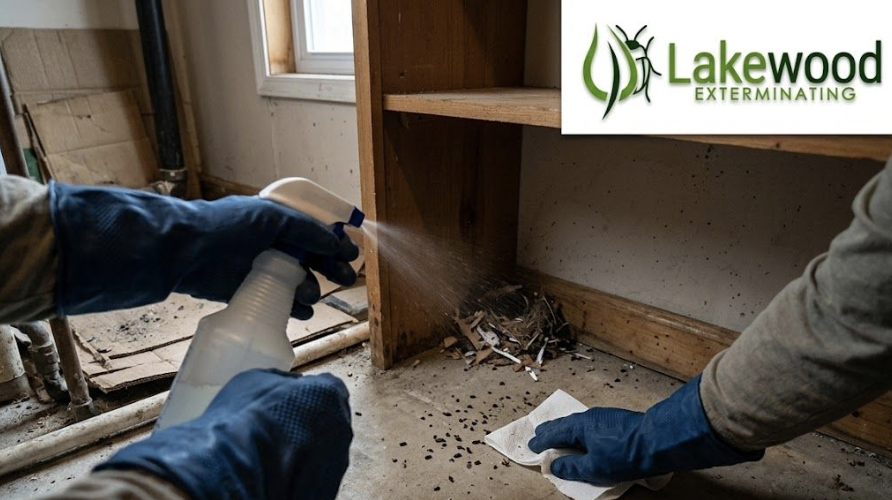
The CDC recommends this method:
- Ventilate the area first if it’s an enclosed space like a shed or crawl space.
- Put on rubber or plastic gloves.
- Spray the droppings, urine spots, and nesting material with a household disinfectant or a bleach solution (1 part bleach to 9 parts water) until they’re very wet.
- Let it soak for 5 minutes, or as long as the disinfectant label says.
- Wipe it up with paper towels and throw them out in a sealed bag.
- Don’t vacuum or sweep. Both put particles in the air.
For heavy contamination, such as a nest in insulation or a garage that’s been taken over, use more protection or have a professional handle it. Our guide to cleaning up mouse droppings safely goes through it in more detail.
What to Do When You Have Mice Inside Your House
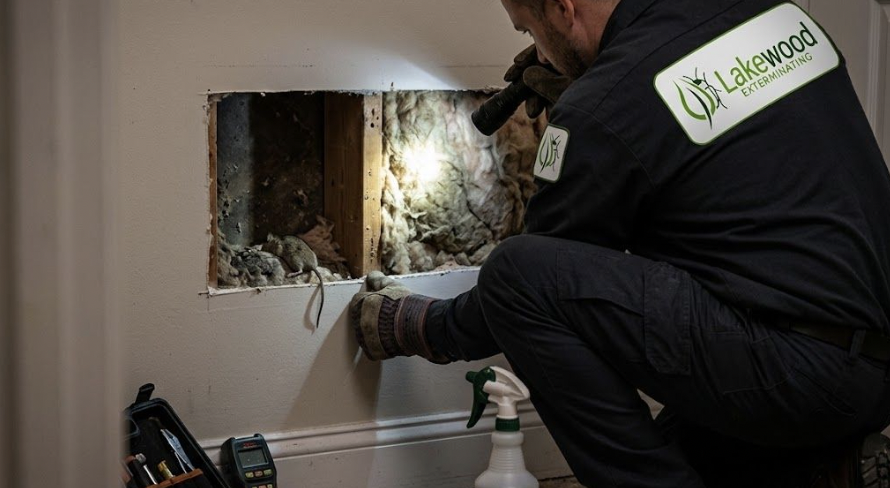
Mice stay in your house for one reason: there’s an opening outside that hasn’t been fixed. Mice can squeeze through gaps about a quarter inch wide, which is smaller than most people expect. If you control mice inside without closing those gaps, you’ll end up in a loop of catching mice, getting a few quiet weeks, and then seeing new ones. Meanwhile droppings and urine keep building up in the walls and attic.
The fix comes in two parts:
- Seal the entry points outside. Check where utility lines enter, gaps around the garage door, foundation cracks, vents, and the spot where the siding meets the foundation. Here’s our walkthrough on how to mouse-proof your home.
- Remove the mice already inside. Trap along walls and in every area with activity until the catches stop.
If you can’t find where they’re getting in, that’s where we come in. Few companies in Cleveland do real mouse-proofing, and we’ve sealed thousands of homes on the west side. Mouse control is what we specialize in.
Frequently Asked Questions
Is it ever just one mouse?
Occasionally a single mouse wanders in, especially in fall when the weather turns cold. It’s not common, though. Mice live in family groups, and one sighting usually means others are nearby. If you’re finding droppings in more than one area, assume there’s more than one.
Is 4 mice an infestation?
Yes. Four mice usually means a family group has settled in and there’s an open entry point. It’s a small infestation, which is the best time to deal with it.
Why do I suddenly have mice?
Usually it’s because the weather changed. Mice move indoors in fall looking for warmth and food. New gaps can also be the cause, such as a shifted garage door seal, a new cable line, or settling around the foundation. Another common cause is a new food source, like pet food or birdseed stored in the basement.
How long does it take to get rid of mice?
Trapping clears most of the mice inside within a few days once the entry points are sealed. If the gaps stay open, it never really ends.
Find Out How Many Mice Are in Your House
Call us and we’ll find out how many mice you have and how they’re getting in. We’re taking mouse calls now. Call (216) 466-2486 to schedule a home visit.
Want to know what happens during a visit? Click here to see what to expect at your appointment. You can also fill out our contact form for a fast response with service details.